
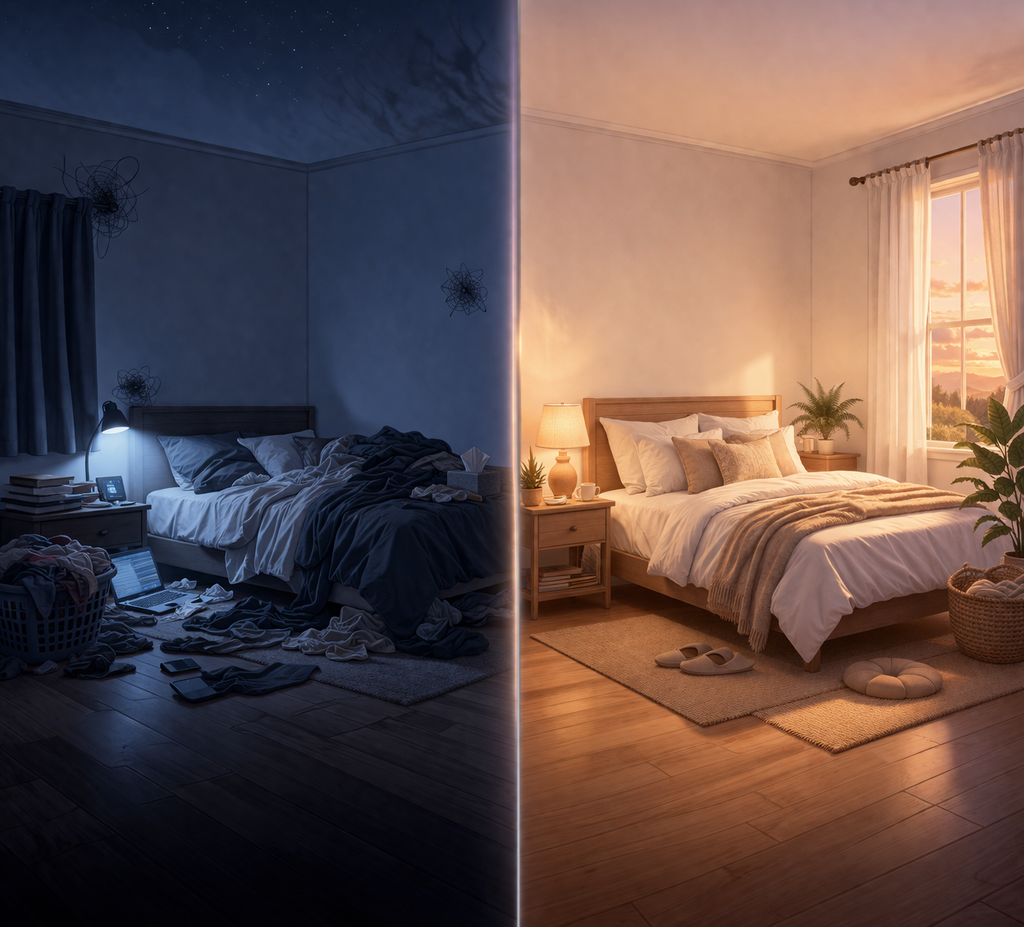
Ever wake up tired, tense, or oddly heavy, even after spending enough hours in bed? The problem may not be your schedule alone. It may be your bedroom energy, which is the overall feeling your room creates through light, noise, air, clutter, color, comfort, and memory.
That idea doesn’t have to be spiritual or vague. A bedroom can either help your nervous system settle down, or keep it slightly on guard. When a space feels busy, stale, bright, or stressful, your body often acts like rest isn’t fully safe yet. Over time, that affects both your sleep and your mood the next day.
What bedroom energy really means for your mood and sleep
Bedroom energy is simply the way your room affects how you feel, mentally and physically. Your brain responds to your surroundings all day, and the bedroom matters most because it’s where you try to recover. If the space feels calm, your body gets a better chance to slow down. If it feels noisy, cluttered, or tied to stress, sleep can become harder. (How Your Bedroom Energy Shapes Your Mood and Sleep)
That matters because sleep isn’t just about closing your eyes. It’s also about feeling settled enough to let go of alertness. Your room sends signals before you even climb under the covers.
Your brain reads the room before your body can relax
A messy floor, harsh lamp, stale air, or buzzing sound can all keep your brain on watch. The same goes for a laptop on the bed or paperwork on the dresser. Even small cues can say, “Stay alert.”
When that happens, your stress response stays a little switched on. Your heart and muscles may not feel wildly tense, but your body doesn’t fully shift into rest mode either. A calm room helps lower that background pressure.
Sleep and mood feed each other. A tense room can lead to lighter sleep, more waking, and less mental reset. Then the next morning feels sharper in the wrong way, with irritability, brain fog, or low patience.
In other words, a bedroom doesn’t just affect the night. It can shape the tone of the whole next day.
The biggest bedroom energy drains that quietly hurt rest
Some bedroom problems are obvious. Others fade into the background because you’ve gotten used to them. Still, your body often notices them even when your mind shrugs them off. (How Your Bedroom Energy Shapes Your Mood and Sleep)
Clutter creates mental noise. A chair buried in clothes, a crowded nightstand, and piles on the floor all give your eyes more to process. That extra input can make the room feel unfinished, even when you’re desperate to relax.
Many people say they don’t notice the mess anymore. Yet the body often does. It reads disorder as one more thing that isn’t handled yet.
That low-grade pressure adds up at bedtime. Instead of feeling held by the room, you may feel nagged by it.
Light, screens, and noise can block the calm your body needs
Bright overhead lights tell the brain it’s still daytime. Phones, TVs, and tablets do the same, especially when you’re scrolling in bed. Blue light can slow melatonin, which is the hormone that helps your body feel sleepy.
Noise also matters more than people think. Street sounds, a loud fan, a snoring partner, or constant notifications can break the sense of safety your brain wants before sleep. Even if you don’t fully wake up, your rest may become lighter and more broken.
Poor air quality and uncomfortable bedding affect more than comfort
A stuffy room can make sleep feel restless fast. So can dust, dry air, or a room that’s too hot. If you’re tossing around to get comfortable, your mood often pays for it in the morning.
Bedding matters too. Scratchy sheets, a worn-out pillow, or an old mattress can turn your bed into a place of frustration. Over time, that physical discomfort changes the emotional feel of the room.
Simple changes that make your bedroom feel calm, safe, and sleep-friendly
The good news is that better bedroom energy usually comes from small fixes, not expensive makeovers. You don’t need a perfect room. You need a room that asks less from your body at night.
A restful bedroom feels like a landing place, not another task.
Start with a quick reset, clear what you can see and use every day
Begin with the easiest zone. That might be the nightstand, the floor by the bed, or the chair holding a week’s worth of clothes. When one area looks clear, the room starts to feel lighter right away.
Keep surfaces mostly open. Put chargers, receipts, random cups, and half-used products away. If possible, move work items out of the bedroom entirely. A laptop bag in the corner can be enough to pull your brain back into work mode.
The goal isn’t minimalism for its own sake. It’s less visual pressure.
Use softer light, better airflow, and comfort cues to help your body unwind
Swap harsh overhead lighting for warm lamps in the evening. If outside light sneaks in, blackout curtains can help. Lower light levels tell your body that bedtime is getting closer.
Fresh air helps too. Open a window when you can, use a fan if the room feels stuffy, and keep the temperature on the cooler side if that feels good to you. Clean bedding also changes the mood of a room fast. Crisp sheets can make the whole space feel calmer.
Scent can help, but only if you enjoy it. A light, familiar smell is enough. Comfort works better than perfection every time.
Protect the bedroom as a place for rest, not stress
Try to keep arguments, doomscrolling, and endless to-do lists out of bed. When the bedroom becomes a place for stress, your brain starts to pair that space with alertness. Then sleep gets harder before your head even hits the pillow.
A short bedtime routine can help break that pattern. Dim the lights, put the phone away, wash your face, and read a few pages. Those small cues tell the brain what’s next.
(How Your Bedroom Energy Shapes Your Mood and Sleep)
A calmer bedroom can improve both sleep and mood
Bedroom energy is really about one simple thing, how your space makes your body and mind feel. When the room feels crowded, bright, noisy, or uncomfortable, sleep often gets lighter and mornings get harder. When it feels calm, dark, fresh, and separate from stress, your body can settle more easily.
The best part is that better sleep doesn’t require a full bedroom makeover. A few smart changes to clutter, light, air, comfort, and nightly habits can make your room feel like rest again.
Follow us on Instagram @nirvanahealingessentials for daily crystal tips and inspiration.