
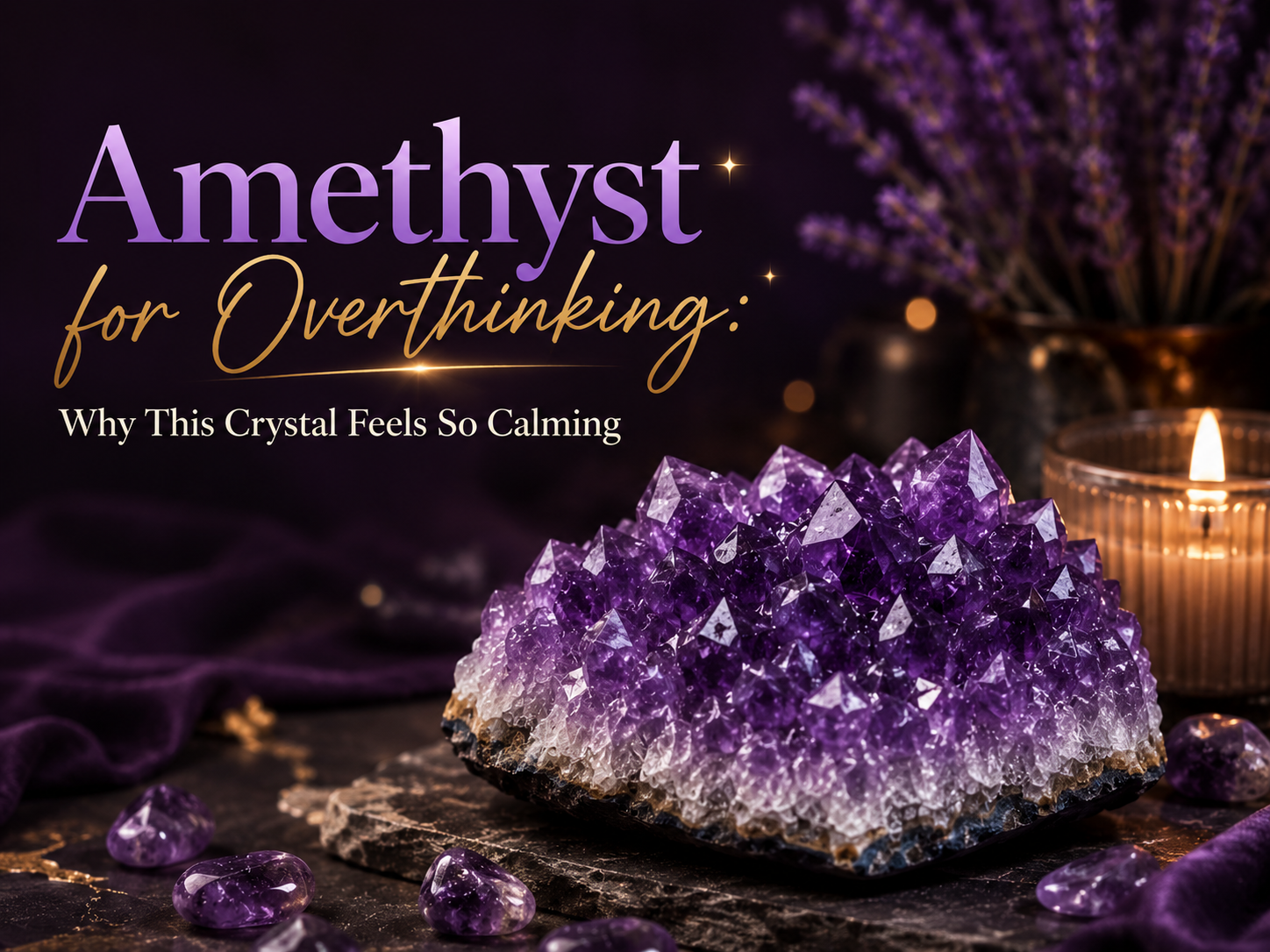
You know the feeling. You’re tired, but your mind keeps replaying one conversation, one mistake, or one thing you forgot to say. Then the loop grows, and suddenly you’re stuck in your own head.
That crowded mental feeling is why many people reach for amethyst. It is the crystal most often linked with calm thinking and emotional balance. People use it as a small wellness tool, not a cure, and for many, its value is simple: it gives the mind a gentle place to land. (Amethyst for Overthinking: Why This Crystal Feels So Calming)
For some, it becomes part of a bedtime routine. For others, it’s a pocket reminder to pause before thoughts spiral. That balanced view matters, because amethyst works best when you treat it as support, not magic.
Amethyst has a strong reputation for peace, clarity, and emotional steadiness. Its purple color feels restful to many people, and its place in spiritual traditions gives it extra meaning. That doesn’t mean it treats anxiety or fixes mental health problems. Still, many people say it helps them feel less mentally crowded, especially when it’s part of a steady self-care routine.
Part of amethyst’s appeal is symbolic. People often connect it with calm, protection, and clearer thinking. When you hold an object that you already link with slowing down, your brain starts to treat it as a cue.
That matters more than it may seem. Meaning can shape how you feel in the moment. A stone that reminds you to breathe, soften your shoulders, and stop replaying every detail can feel reassuring because it interrupts the mental loop.
If you look at popular guides to crystals for overthinking, amethyst shows up again and again. Its reputation stays strong because people don’t only want something pretty. They want a small object that helps them shift attention away from racing thoughts.
Why its look and feel matter as much as its reputation
Amethyst feels calming for practical reasons too. The color is soft but rich. The surface is often cool and smooth. Both can help pull attention out of your head and back into your body. (Amethyst for Overthinking: Why This Crystal Feels So Calming)
That sensory part is easy to miss, but it may be the most useful piece. When your thoughts feel noisy, holding something solid can create a brief reset. Seeing a stone on your desk or nightstand can do the same thing. It becomes a quiet signal that says, pause for a second.
Sometimes the calming effect comes less from the crystal itself and more from what it helps you remember to do.
How to use amethyst in simple ways that fit real life
You don’t need a big ritual or a complicated setup. The easiest way to use amethyst is to turn it into a cue for a short pause during your day.
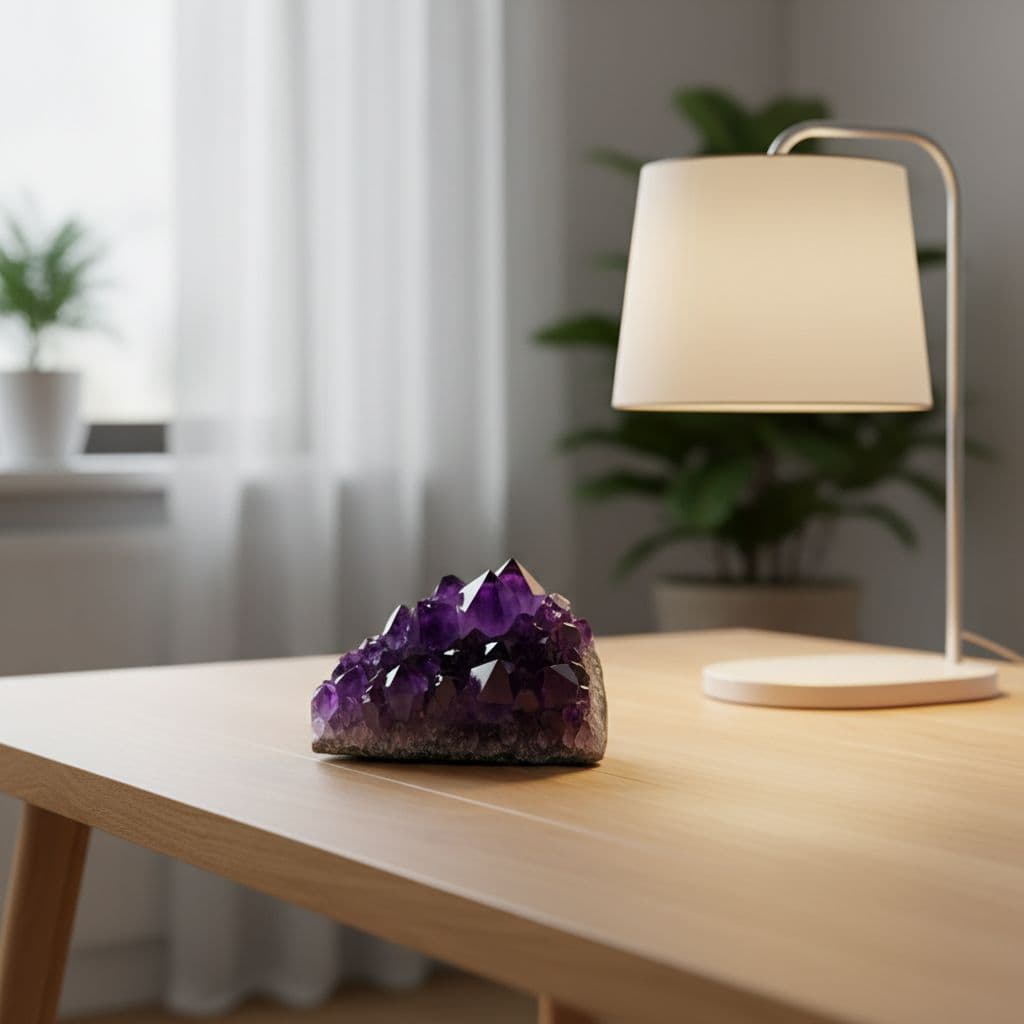
Placement matters because visibility matters. A stone on your desk can remind you to breathe before answering a tense email. One in your pocket can give your hands something grounding during a stressful commute or long meeting. On a bedside table, it can become part of the signal that the day is done.
The goal is not to expect the crystal to erase stress. The goal is to make it a calming cue. Each time you notice it, you get a chance to stop the spiral early. Over time, that tiny pause can feel more natural.
A short calming routine to pair with the crystal
A simple routine works better than a grand one. Try this when your thoughts won’t slow down:
- Hold the stone in your hand.
- Take five slow breaths.
- Name the worry in one short sentence.
- Choose one next step, or decide to return to it later.
That takes less than five minutes. The crystal doesn’t do the work for you. It helps you stay with the routine instead of getting pulled back into the loop. If you want a quick example of how people build this into bedtime, this short amethyst breathing reel shows the same basic idea.
A pretty crystal can be useful, but shopping with clear expectations saves money and frustration. Price, shine, and big claims don’t tell you much on their own.
How to pick a stone that feels right to you
Choose a stone you’ll actually use. That’s more important than buying the darkest purple piece or the most expensive one in the shop. A small tumbled stone is easy to carry. A palm stone can feel better for quiet moments. A cluster may work best if you want one for your desk or bedroom.
It’s also smart to ask what you’re buying. Some sellers offer dyed glass or heavily altered pieces that look flashy but don’t feel natural. A trustworthy seller should be able to tell you what the stone is and whether it has been treated. You can browse guides on healing gems for overthinkers, but personal comfort still matters most.
Simple expectations that keep the crystal useful instead of overhyped
Amethyst can support a calming routine, but it works best alongside basic habits that help the mind settle. Good sleep, journaling, movement, and breaks from screens all do more for overthinking than any object on its own.
That doesn’t make the crystal pointless. It makes it honest. A stone can remind you to use those habits when you need them. If overthinking starts to affect sleep, work, or daily life in a bigger way, getting support from a mental health professional is the better next step. (Amethyst for Overthinking: Why This Crystal Feels So Calming)
Final thoughts
Amethyst may help reduce the feeling of overthinking because it gives you something calm and steady to focus on. A stone on your desk, in your pocket, or by your bed can be enough to interrupt a mental loop and help you slow down.
The real value is often the habit built around it. If amethyst helps you pause, breathe, and choose one next step, then it has already done something useful.
Follow us on Instagram @nirvanahealingessentials for daily crystal tips and inspiration.